

'%3e%3crect opacity='0.2' width='32' height='32' fill='%2312306C'/%3e%3cpath d='M24.2885 25.0767C24.8494 24.964 25.1815 24.3707 24.8951 23.8718C24.2439 22.7376 23.2141 21.7409 21.8952 20.9822C20.2039 20.0094 18.1317 19.4821 16 19.4821C13.8683 19.4821 11.7961 20.0094 10.1049 20.9822C8.78587 21.7409 7.75609 22.7376 7.10495 23.8718C6.8185 24.3707 7.15063 24.964 7.71154 25.0767L8.68725 25.2727C13.5149 26.2424 18.4851 26.2424 23.3128 25.2727L24.2885 25.0767Z' fill='%2312306C'/%3e%3cpath d='M22.2359 12.2225C22.2359 15.659 19.444 18.4449 16 18.4449C12.556 18.4449 9.76407 15.659 9.76407 12.2225C9.76407 8.78589 12.556 6 16 6C19.444 6 22.2359 8.78589 22.2359 12.2225Z' fill='%2312306C'/%3e%3c/g%3e%3cdefs%3e%3cclipPath id='clip0_2531_12631'%3e%3crect width='32' height='32' rx='16' fill='white'/%3e%3c/clipPath%3e%3c/defs%3e%3c/svg%3e)

By Dr. Brandon Colby MD, a Personalized Preventive Medicine specialist and expert in clinical genomics.

Alzheimer's disease is the most common type of dementia, affecting an estimated 44 million people worldwide. It is characterized by progressive cognitive decline and memory loss. As life expectancy increases globally, the incidence of neurodegenerative disease is also rising.
Alzheimer's disease does not have to be an inevitable part of aging. Many lifestyle choices can slow or prevent the onset of the disease by years or even decades. Understanding your risk factors is the first step.
Risk Factors of Alzheimer's Disease
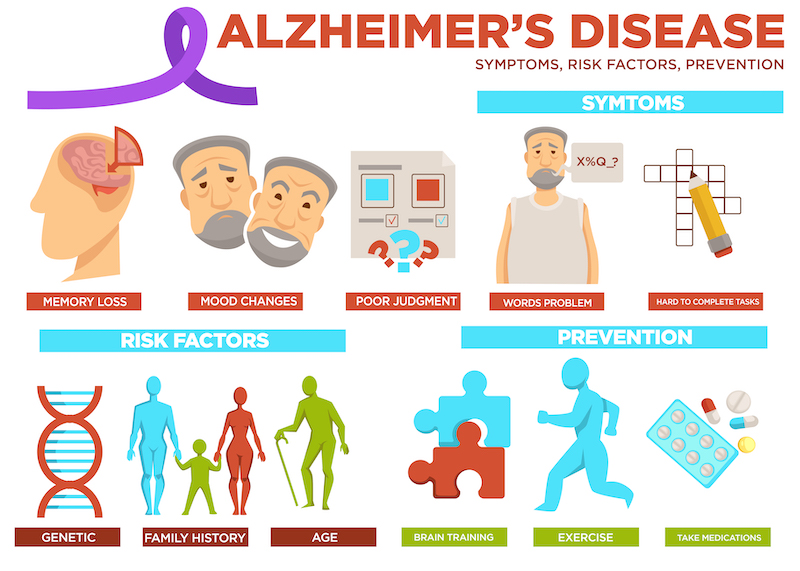
Several factors can increase the likelihood of developing Alzheimer's. Some cannot be modified, but others respond directly to lifestyle interventions.
Genetics
Although Alzheimer's is not a strictly genetic disease, genetics plays an important role. The APOE gene regulates brain health processes and produces apolipoprotein E, a protein that helps clear beta-amyloid deposits that form the plaques associated with Alzheimer's. The APOE4 allele reduces production of this protein and is the primary genetic risk factor for the disease. The APOE2 allele is protective. Other genes with known associations include TOMM40, GAB2, TREM2, SORL1, CLU, CR1, ABCA7, PICALM, and PLD3.
Early-onset familial Alzheimer's disease (eFAD) is an autosomal dominant condition linked to mutations in APP (chromosome 21), PS1 (chromosome 14), and PS2 (chromosome 1). It is extremely rare, representing 0.1 percent of all Alzheimer's cases.
Age
Most cases of Alzheimer's begin after age 65. While aging itself does not cause Alzheimer's, risk increases with age. Approximately 10 percent of cases affect people under 65 as early-onset Alzheimer's disease.
Mild Cognitive Impairment (MCI)
MCI causes cognitive decline greater than expected for a person's age. Approximately 40 percent of seniors diagnosed with MCI develop some form of dementia within three years. It is considered a significant risk factor for Alzheimer's.
Cardiovascular Disease
Heart health and brain health are closely linked. Heart disease, hypertension, atherosclerosis, stroke, and coronary heart disease all increase the risk of Alzheimer's and vascular dementia.
Traumatic Brain Injury (TBI)

Studies show a strong link between TBI and the development of Alzheimer's. The more severe the injury, the greater the increased risk.
Substance Abuse
Heavy alcohol consumption and tobacco smoking increase risk of Alzheimer's disease and cognitive decline. Moderate red wine consumption has been associated with a reduced risk of dementia in some studies.
Down Syndrome
Down syndrome involves an extra copy of chromosome 21, which contains the APP gene linked to early-onset familial Alzheimer's. Most people with Down syndrome develop Alzheimer's symptoms by age 40.
Ways to Prevent Alzheimer's Disease

Medications
Certain medications used for other conditions have shown protective effects against Alzheimer's. NSAIDs such as ibuprofen may help prevent the accumulation of amyloid plaques and are particularly relevant for people with one or two APOE4 alleles. Statins used to treat high cholesterol may also reduce plaque formation and tau protein tangles. Always consult a physician before starting or stopping any medication.
Build a Cognitive Reserve
Cognitive reserve refers to the brain's resilience against age-related decline. It can be built through continuing education, complex work, challenging mental activities, learning new skills, social engagement, using your non-dominant hand, and playing a musical instrument. Brain games such as chess, crosswords, sudoku, and memory exercises also contribute.
Stay Healthy and Active

Regular aerobic exercise, maintaining a healthy weight, and following a nutritious diet all reduce multiple risk factors for Alzheimer's. Physical activity improves cognition and brain plasticity. A sedentary lifestyle significantly increases risk.
Alzheimer's Prevention Diet

The Mediterranean diet is widely recommended for brain health and Alzheimer's prevention. Research suggests it can slow early changes in brain function. It is plant-heavy, high in antioxidants, and includes fruits, vegetables, whole grains, olive oil, fatty fish, moderate poultry and dairy, and limited red meat. Regular coffee consumption has also been associated with reduced Alzheimer's risk.
Learn a New Language
Bilingual people with genetic risk factors for Alzheimer's tend to develop symptoms later in life compared to monolingual individuals. Learning a new language improves neuroplasticity and builds cognitive reserve.
Prevent Head Trauma
Reducing TBI risk lowers Alzheimer's risk. Practical steps include wearing a helmet during contact sports and cycling, always wearing a seatbelt, avoiding driving under the influence of any substance, and eliminating distracted driving.
Supplements: A Note of Caution

High-dose vitamin E supplements have been found in clinical trials to produce poor outcomes. It is better to obtain vitamin E through diet unless a deficiency is confirmed by a physician.
Omega-3 fatty acids have well-known cardiovascular benefits. However, several studies have found that for people carrying the APOE4 allele, omega-3 supplements may actually increase the risk of Alzheimer's disease by causing additional oxidative damage to the brain. This is one important reason to know your APOE status through genetic testing before starting omega-3 supplementation.
Genetic Testing for Alzheimer's

Genetic testing can identify whether you carry variants that increase your risk of Alzheimer's disease. Whole Genome Sequencing reads 100% of your DNA and can determine your genetic risk for Alzheimer's alongside risk for other multifactorial and genetic diseases, carrier status, medication response, and wellness insights.
Discovering you carry a risk variant such as APOE4 is not a diagnosis. It is information you can act on. With appropriate prevention strategies, many people are able to prevent or significantly delay the onset of Alzheimer's disease.
References
- Alzheimer's Disease Statistics. Alzheimer's News Today.
- Colby MD, B. Outsmart Your Genes. 2010.
- Familial Alzheimer's Disease. Weill Institute for Neurosciences.
- Mild Cognitive Impairment. Alzheimer's Association.
- Edwards III GA, et al. Modifiable Risk Factors for Alzheimer's Disease. Front Aging Neurosci. 2019.
- Piano MR. Alcohol's Effects on the Cardiovascular System. Alcohol Res. 2017.
- How Is Alzheimer's Disease Treated? NIH National Institute on Aging.
- Neuroscientists say daily ibuprofen can prevent Alzheimer's disease. ScienceDaily. 2018.
- Schultz BG, et al. The role of statins in cognitive impairment and protection against dementia. Transl Neurodegener. 2018.
- Stern Y. Cognitive reserve in ageing and Alzheimer's disease. Lancet Neurol. 2012.
- Mediterranean diet may slow development of Alzheimer's disease. NIH Research Matters. 2018.
- Traumatic Brain Injury and Concussion. CDC.
- Arellanes IC, et al. Brain delivery of supplemental DHA. EBioMedicine. 2020.
To order Whole Genome Sequencing, visit the Sequencing store.
Already have DNA data from another provider? Sequencing works with raw data files from virtually all testing companies including 23andMe, AncestryDNA, MyHeritage, FamilyTreeDNA, and many more. Upload your data for free and start exploring personalized insights across over 30,000 genes.