

'%3e%3crect opacity='0.2' width='32' height='32' fill='%2312306C'/%3e%3cpath d='M24.2885 25.0767C24.8494 24.964 25.1815 24.3707 24.8951 23.8718C24.2439 22.7376 23.2141 21.7409 21.8952 20.9822C20.2039 20.0094 18.1317 19.4821 16 19.4821C13.8683 19.4821 11.7961 20.0094 10.1049 20.9822C8.78587 21.7409 7.75609 22.7376 7.10495 23.8718C6.8185 24.3707 7.15063 24.964 7.71154 25.0767L8.68725 25.2727C13.5149 26.2424 18.4851 26.2424 23.3128 25.2727L24.2885 25.0767Z' fill='%2312306C'/%3e%3cpath d='M22.2359 12.2225C22.2359 15.659 19.444 18.4449 16 18.4449C12.556 18.4449 9.76407 15.659 9.76407 12.2225C9.76407 8.78589 12.556 6 16 6C19.444 6 22.2359 8.78589 22.2359 12.2225Z' fill='%2312306C'/%3e%3c/g%3e%3cdefs%3e%3cclipPath id='clip0_2531_12631'%3e%3crect width='32' height='32' rx='16' fill='white'/%3e%3c/clipPath%3e%3c/defs%3e%3c/svg%3e)


Knowing your blood type is useful for more reasons than most people realize. This article covers why your blood type matters and the practical ways to find out what it is, including some that cost nothing.
The Importance of Knowing Your Blood Type
Your blood type can influence your health in several ways:
- Non-O blood types carry a higher risk of dying from heart disease.
- People with Type O have a lower risk of blood clots.
- Types A, B, and AB may be at increased risk of gastric cancer.
- Types AB, A, and B are more likely to develop deep vein thrombosis.
Knowing your blood type can also save your life in a medical emergency requiring a blood transfusion. Being able to tell healthcare professionals your type right away means getting the right blood faster. Research has also explored potential connections between blood type and COVID-19 susceptibility and severity, which is covered in more detail in Blood Type and COVID: Infection Risk and Severity.
Special Considerations for Pregnant Women
Rhesus (Rh) factor is an inherited protein on the surface of red blood cells. People who have the protein are Rh-positive and those without it are Rh-negative. If you are Rh-negative and your baby is Rh-positive, there can be complications in subsequent pregnancies. If a second baby is Rh-positive, antibodies can cross the placenta and damage the baby's red blood cells, leading to anemia. Pregnant women should check their Rh status, and an Rh-negative result means talking with your healthcare provider about next steps.
Different Blood Types
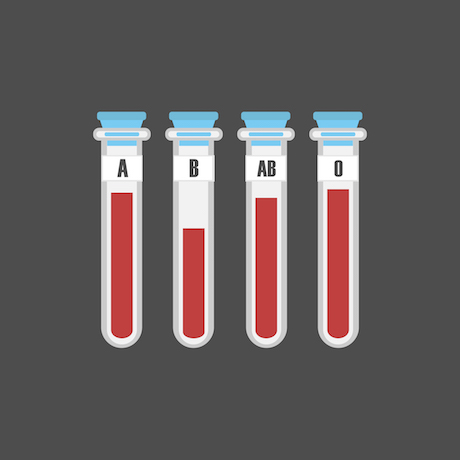
There are two main blood classification systems: ABO and Rh. Blood type is determined by the antigen on the surface of red blood cells:
- Type A has an A antigen.
- Type B has a B antigen.
- Type AB has both A and B antigens.
- Type O has neither A nor B antigens.
In addition to the ABO blood group, the Rh factor (positive or negative) is combined to produce your full blood type, such as A positive or O negative.
How a Blood Type Test Is Performed
A standard blood type test involves a blood draw analyzed with forward typing and reverse typing. Forward typing mixes blood cells with A and B antibodies to see if they agglutinate (stick together). Blood cells that agglutinate with A antibodies are Type A; with B antibodies, Type B; with both, Type AB; and with neither, Type O. Reverse typing removes red blood cells and mixes the remaining plasma with A or B blood to confirm the result.
Ways to Check Your Blood Type for Free
A standard blood draw at a doctor's office may require health insurance coverage or a co-pay, and most healthcare providers need a medical basis to order one. However, there are a few ways to find out your blood type at no cost.
Blood donation is one option. When you donate blood, you can ask the organization to notify you of your blood type, though this typically takes a few weeks. Contact the American Red Cross to find a donation location near you. People with AB-negative blood should consider donating as it is the least common type, and people with Type O are universal donors whose blood can be used for anyone.
DNA testing is another route. If you have already taken a DNA test from 23andMe, AncestryDNA, or MyHeritage, you can download your raw data and upload it to Sequencing for a blood type analysis at no additional cost. If you have not yet taken a DNA test, Sequencing offers whole genome sequencing and other tests that include blood type analysis along with a much wider range of health insights.
Home blood typing kits are also available for purchase, though they require a finger prick and can sometimes be difficult to read accurately.
About the Author
Dr. Brandon Colby MD is a US physician specializing in the personalized prevention of disease through the use of genomic technologies. He is an expert in genetic testing, genetic analysis, and precision medicine. Dr. Colby is the founder of Sequencing and the author of Outsmart Your Genes.
Dr. Colby holds an MD from the Mount Sinai School of Medicine, an MBA from Stanford University's Graduate School of Business, and a degree in Genetics with Honors from the University of Michigan. He is an Affiliate Specialist of the American College of Medical Genetics and Genomics (ACMG), an Associate of the American College of Preventive Medicine (ACPM), and a member of the National Society of Genetic Counselors (NSGC).