

'%3e%3crect opacity='0.2' width='32' height='32' fill='%2312306C'/%3e%3cpath d='M24.2885 25.0767C24.8494 24.964 25.1815 24.3707 24.8951 23.8718C24.2439 22.7376 23.2141 21.7409 21.8952 20.9822C20.2039 20.0094 18.1317 19.4821 16 19.4821C13.8683 19.4821 11.7961 20.0094 10.1049 20.9822C8.78587 21.7409 7.75609 22.7376 7.10495 23.8718C6.8185 24.3707 7.15063 24.964 7.71154 25.0767L8.68725 25.2727C13.5149 26.2424 18.4851 26.2424 23.3128 25.2727L24.2885 25.0767Z' fill='%2312306C'/%3e%3cpath d='M22.2359 12.2225C22.2359 15.659 19.444 18.4449 16 18.4449C12.556 18.4449 9.76407 15.659 9.76407 12.2225C9.76407 8.78589 12.556 6 16 6C19.444 6 22.2359 8.78589 22.2359 12.2225Z' fill='%2312306C'/%3e%3c/g%3e%3cdefs%3e%3cclipPath id='clip0_2531_12631'%3e%3crect width='32' height='32' rx='16' fill='white'/%3e%3c/clipPath%3e%3c/defs%3e%3c/svg%3e)

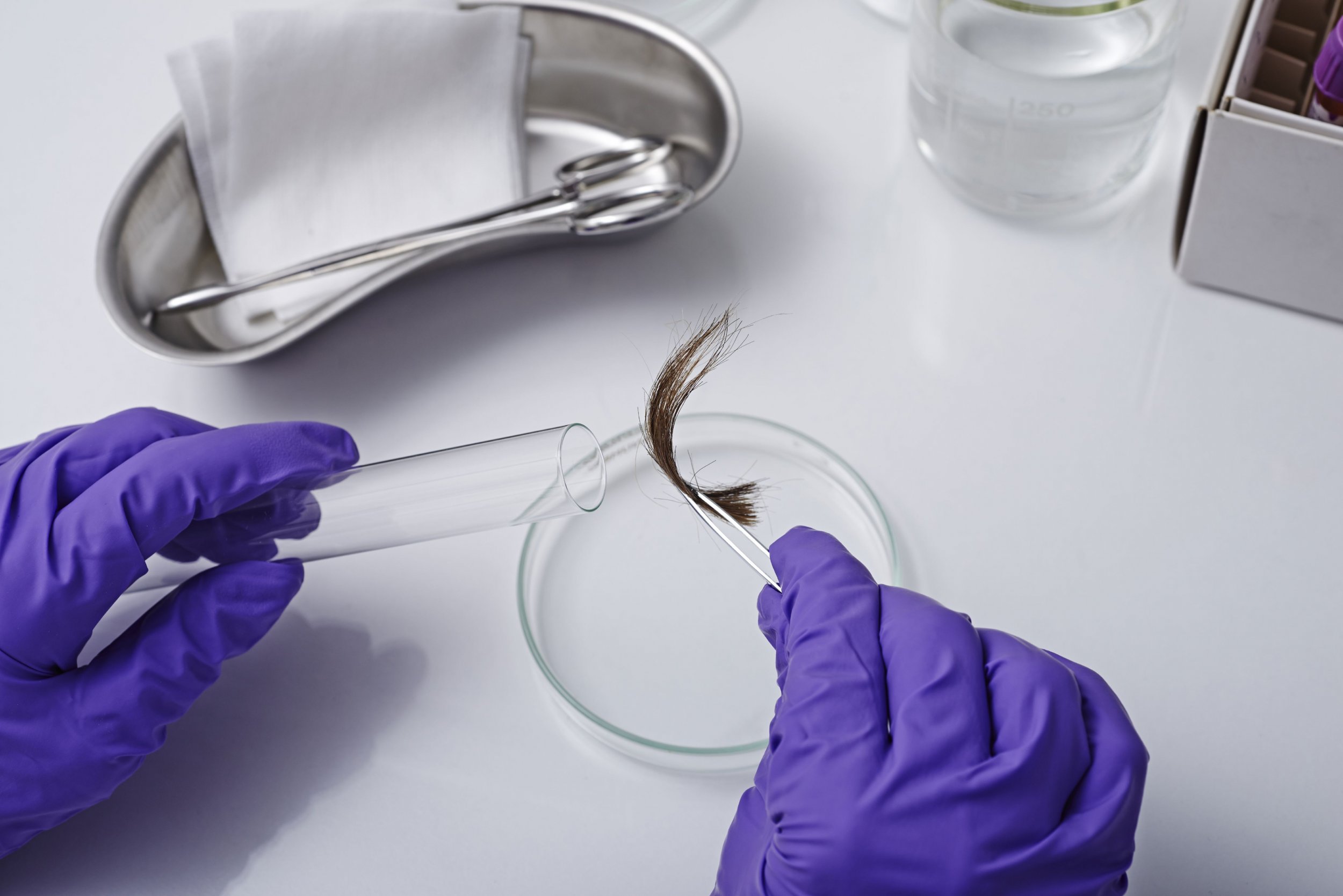
When you hear the term hair DNA test, the first thing that might come to mind is a true crime movie or TV show. Hair is regularly gathered at crime scenes, just like in the movies, but did you know that it is now regarded as unreliable and is rarely used as forensic evidence? The FBI even admitted that testimony based on microscopic hair analysis was incorrect in at least 90% of instances. As a result, there is well-founded skepticism about hair DNA testing as a reliable means of identification. Today's researchers, however, are working to understand both its limitations and potential.
There are several issues with utilizing hair DNA as evidence, many of which stem from the possibility of contamination. This was the case in the murder investigation of Jane Mixer, a 23-year-old law student murdered in March 1969, whose death remained unexplained for over four decades. Finally in 2005, retired nurse Gary Leiterman was charged with the crime by Michigan State Police.
Read on for five key things you need to know about hair DNA tests.
1. Hair Is One of the Most Common Sources of DNA at Crime Scenes
Hair is one of the most accessible and inexpensive ways to collect DNA. It is also one of the most commonly found biological materials at crime scenes, which is why forensic investigators have historically relied on it.
Contamination at a crime scene is always a possibility. These are not the only issues that crime scene investigators face: DNA may deteriorate quickly when exposed to moisture or direct sunlight, and there are occasions when there is not enough DNA to gather.
The use of touch DNA, which has more recently been explored as a solution, is one option. This is genetic material transmitted by a person's brief contact with a surface, such as a countertop or a door handle. The approach, however, is based on the examination of a small number of skin cells, which can be contaminated by secondary transfer. For example, if two people shake hands, one of them may contact a surface and leave the other person's DNA behind.
Obtaining a clean and usable DNA sample adequate for precise identification can be challenging. When mistakes do occur, the repercussions can be catastrophic, with wrongful conviction being the most serious example. Researchers recognize that additional work is needed before hair DNA analysis can be considered fully reliable in forensic settings.
2. Can Hair Be Used in a Legal Case?
Hair analysis can be performed to determine if two people are related through blood. Hair structure and DNA from cells adhering to the root of the hair can be used in forensic hair analysis to assist in identifying a suspect.
Hair samples are examined under a microscope after being tested with specific substances. Hair analysis can also be done to screen for metal toxicity, such as lead or mercury poisoning. However, hair analysis is rarely utilized for this type of testing.
Unless the sample's validity can be officially validated through the correct chain of protocols, hair samples and their findings are not generally applicable to legal DNA testing.
3. How Does Hair DNA Testing Work?
Hair is a protein that develops from the skin's hair follicles. A hair develops in the follicle for several months before stopping and falling out, after which a new hair develops. Because hair grows slowly, it can provide a timeline of exposure to various substances.
The hair shaft itself contains mitochondrial DNA rather than nuclear DNA. Nuclear DNA, which contains your full genetic blueprint, is found in the cells attached to the root of the hair. This is why hair with the root attached is far more useful for DNA testing than a shed hair with no follicle.
4. What Are the Legal Standards for Hair Evidence?
Physical contact such as in a robbery or assault would typically involve collecting clothing or other items that may have picked up hair that could be used to help identify suspects.
In 2009, the National Academy of Sciences released a report called "Strengthening Forensic Science in the United States: A Path Forward," which stated that since the advancement of DNA analysis, microscopic hair analysis should be confined to establishing which hairs to test and whether hairs share similar characteristics, but should not be considered a reliable tool for identifying individual suspects.
5. What Problems Can Occur When Testing Hair for DNA?
The hair follicle is the component most useful for DNA testing, and it is also the part least likely to be present in a preserved strand of hair.
Sample age is another significant factor. Obviously older samples present greater challenges, though researchers have successfully tested DNA from remarkably ancient specimens. The main obstacles for older samples are degradation of the DNA strand and the presence of contaminants that can interfere with accurate analysis.
Whole genome sequencing from a cheek swab sample is a far more reliable and comprehensive method than hair-based DNA testing. It is unlikely that hair-based consumer testing will replace cheek swab testing in the near future given these limitations.
The Better Alternative: Whole Genome Sequencing
As more people become interested in learning about their DNA, whether for health reasons, ancestry research, or genetic risk assessment, there are far more accurate and comprehensive tests available than hair DNA tests.
Sequencing's whole genome sequencing uses a simple cheek swab to analyze 100% of your DNA across over 30,000 genes. It is CLIA-certified, clinical-grade, and provides a complete genetic picture that no hair-based test can match.
Order your whole genome sequencing kit today or upload your existing DNA data for free to get started.