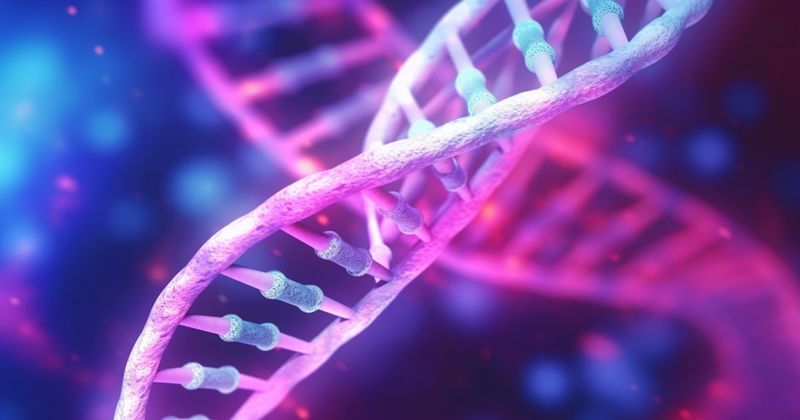
Decoding Duchenne and Becker Muscular Dystrophy: The Role of Genetic Testing
Dystrophin gene mutations cause both forms, with Becker starting later and progressing more slowly than Duchenne, and carrier detection matters in X-linked families.


MD · MBA
Physician specializing in genetic analysis and personalized preventive medicine, and author of Outsmart Your Genes.
Brandon Colby is a physician-expert in the fields of genetic analysis and Personalized Preventive Medicine. He holds an MD from the Mount Sinai School of Medicine, an MBA from Stanford University's Graduate School of Business, and a degree in Genetics from the University of Michigan.
Dr. Colby is the author of the book Outsmart Your Genes and has developed numerous technologies that improve the analysis, interpretation, and actionability of genome sequencing data. He is an Affiliate Specialist of the American College of Medical Genetics and Genomics (ACMG), an Associate of the American College of Preventive Medicine (ACPM), and a member of the National Society of Genetic Counselors (NSGC).
Articles by Brandon Colby, MD are reviewed for accuracy by Sequencing's medical and scientific team. This page is for informational purposes and does not constitute medical advice.
Dystrophin gene mutations cause both forms, with Becker starting later and progressing more slowly than Duchenne, and carrier detection matters in X-linked families.

An NMDA receptor subunit is encoded by GRIN2A, and mutations disturb synaptic function, leading to severe developmental delay and frequent seizures in children.

Early joint contractures, slowly progressive muscle weakness and cardiac involvement form the triad of EDMD, most often linked to EMD mutations affecting emerin.
Arising from the ependymal cells lining the ventricles and spinal canal, ependymoma is examined through the YAP1 gene and what testing adds to prognosis and care.

Minor friction is enough to blister fragile skin when KRT5 or KRT14 is altered; diagnosis, family planning options and iPSC research on EBS are explained.
Widespread scaling and peeling of the skin follow mutations that disturb barrier function; exome sequencing, linkage analysis and preimplantation testing are described.
Excess aldosterone upsets sodium and potassium balance and raises blood pressure. In Type I, a cross-over between the CYP11B1 and CYP11B2 genes is the cause.
Insulin pours out even when blood sugar is normal or low, and a defect in the SCHAD enzyme that impairs mitochondrial fatty acid oxidation is one identified cause.