
BUN to Creatinine Ratio: What High and Low Levels Mean
Medically reviewed by Brandon Colby, MD, last reviewed
Short answer: The BUN to creatinine ratio compares two kidney related blood tests, and a typical result falls between about 10:1 and 20:1. A result outside that range is a clue and not a diagnosis, so your doctor reads it together with your individual BUN and creatinine values, your hydration, your medicines and your symptoms.
The BUN to creatinine ratio compares two waste products, blood urea nitrogen (BUN) and creatinine, to help clinicians understand how well the kidneys are filtering blood. BUN and creatinine are usually ordered as part of a basic or comprehensive metabolic panel rather than as a standalone test.¹,³ On its own, the ratio is a clue rather than a diagnosis. Interpreting it correctly requires looking at the individual BUN and creatinine values alongside a person's health history, hydration status, and any symptoms present.³,⁴
This article explains what the ratio measures, what a typical range looks like, and what can cause it to run high or low. It is intended for general education and does not replace guidance from your own healthcare provider.
What Is the BUN to Creatinine Ratio?
BUN and creatinine are both waste products removed from the blood by the kidneys, but they come from different sources and behave differently in the body.
- Blood urea nitrogen (BUN) measures the amount of urea nitrogen in the blood. Urea forms in the liver as the body breaks down protein, then travels through the bloodstream to the kidneys, where it is filtered out and leaves the body in urine.¹,³ Because urea production and reabsorption can shift with diet, hydration, and certain medications, BUN levels can fluctuate more than creatinine.³,⁴
- Creatinine is a waste product from normal muscle activity. Since muscle mass stays relatively stable from day to day, creatinine is produced at a fairly constant rate, which makes it a more reliable marker of kidney filtering ability on its own.⁴,⁶
Comparing the two gives clinicians more diagnostic context than either value alone. This is especially useful for distinguishing between prerenal causes (problems before the kidney, such as dehydration or reduced blood flow), intrinsic renal causes (damage within the kidney itself), and postrenal causes (a blockage somewhere after the kidney, such as a kidney stone).⁴
Normal Range for the BUN to Creatinine Ratio
Reference ranges vary somewhat by laboratory and testing method, so always check the range printed on your own lab report. As general guidance:
- BUN alone: roughly 6 to 24 mg/dL in adults.¹,²,³
- Creatinine alone: roughly 0.7 to 1.3 mg/dL in men and 0.6 to 1.1 mg/dL in women.⁵,⁶,⁷
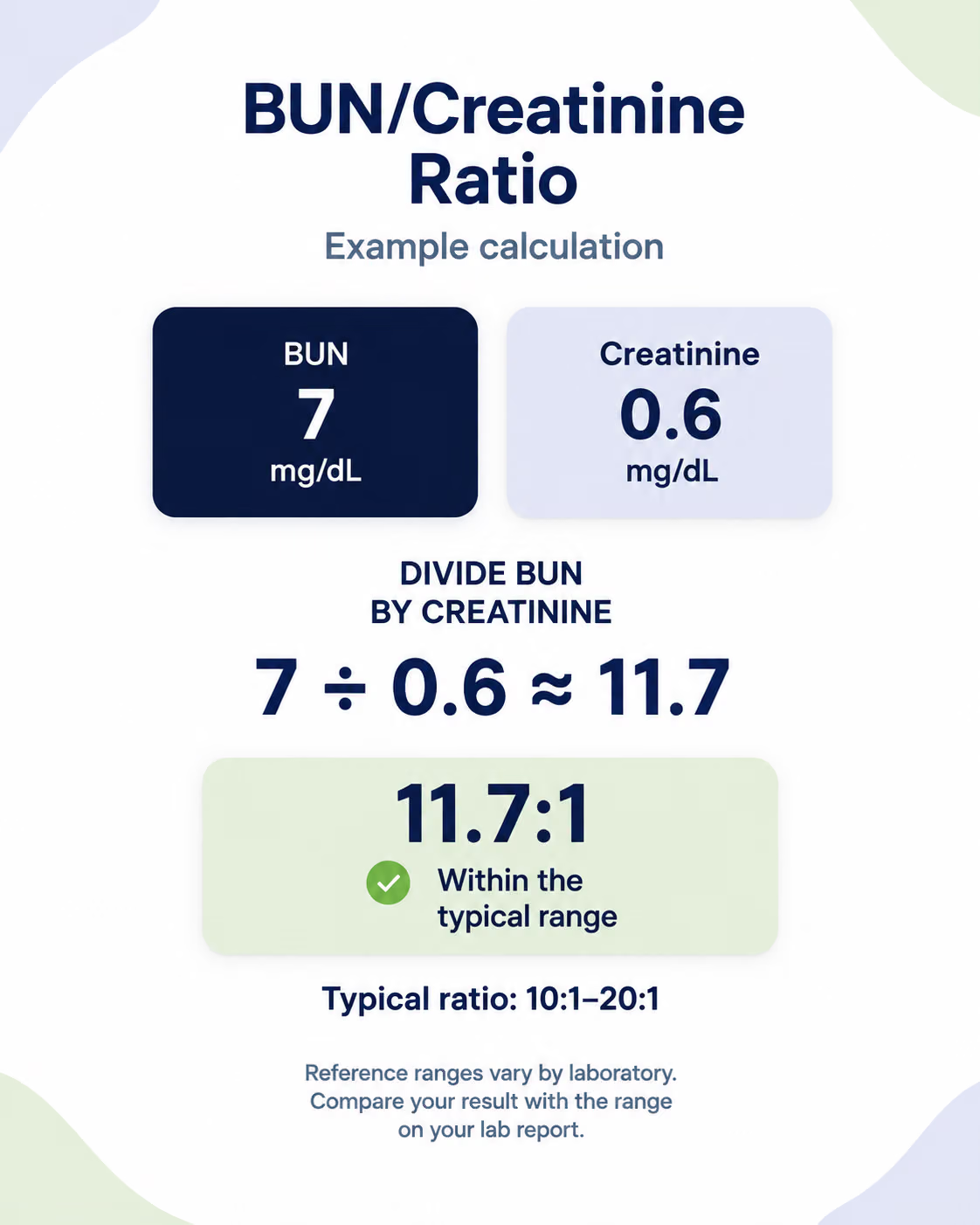
The ratio is calculated by dividing BUN by creatinine, with both values expressed in mg/dL. The ratio itself has no units. For example, a BUN of 7 mg/dL divided by a creatinine of 0.6 mg/dL gives a ratio of about 11.7:1.
- BUN to creatinine ratio: typically between 10:1 and 20:1.²,⁴
A ratio in the typical range, alongside normal individual BUN and creatinine results, can be reassuring, but your clinician also considers changes over time and other kidney tests.³,⁴
What a High BUN to Creatinine Ratio Can Mean
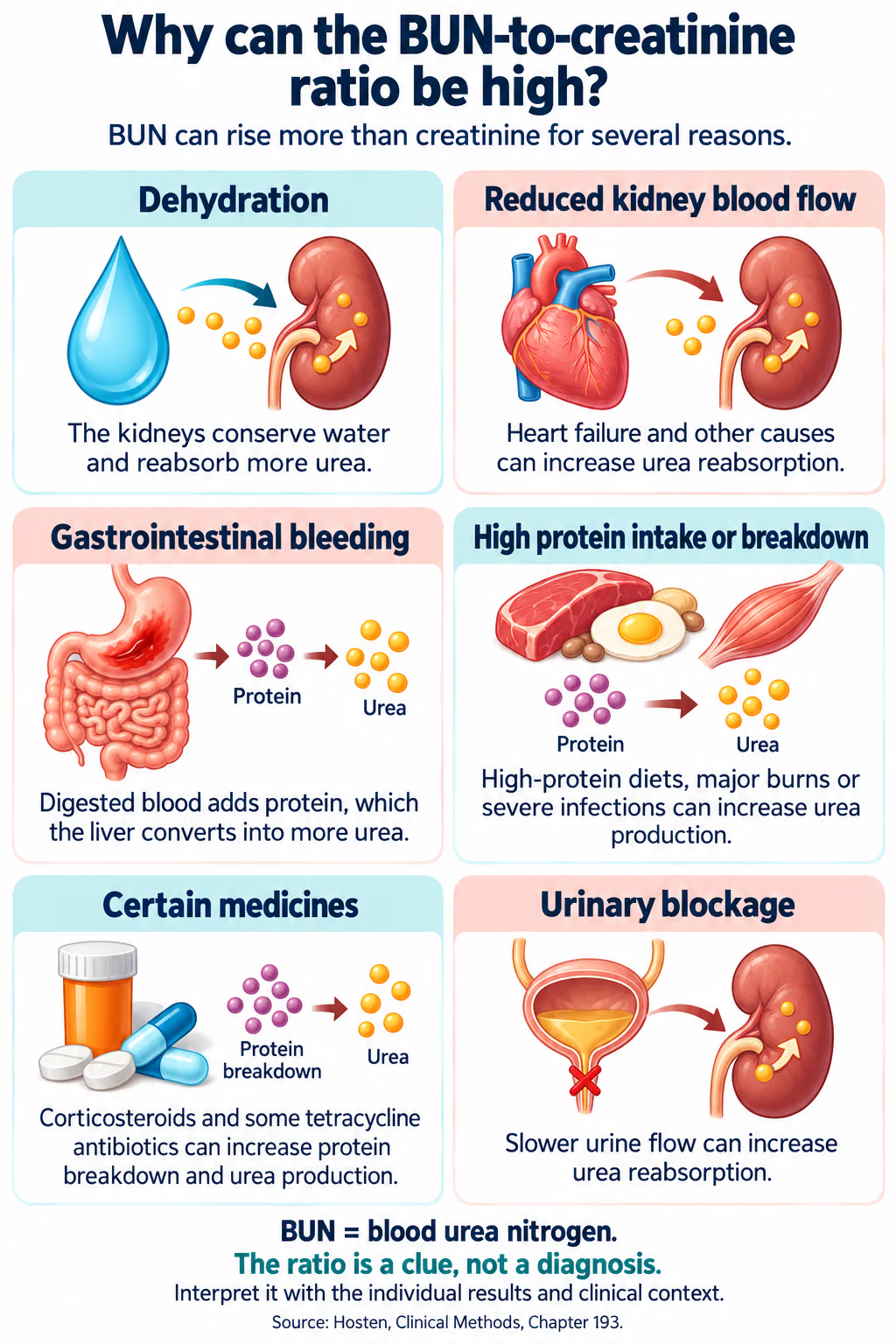
A ratio above the typical range can point to several different situations, including:
- Dehydration. Reduced fluid volume causes the kidneys to reabsorb more urea, which tends to raise BUN more than creatinine and pushes the ratio up. Creatinine is not appreciably reabsorbed, which helps explain why BUN rises more.²,⁴
- Reduced blood flow to the kidneys, such as from congestive heart failure, which can increase how much urea the kidneys reabsorb.²,⁴
- Gastrointestinal bleeding. Blood in the digestive tract is broken down as protein, which raises BUN.²
- A high protein diet or increased protein breakdown. Significant burns, infection, or other catabolic states can increase the breakdown of the body's proteins, producing more urea and raising BUN.¹,⁴
- Certain medications, such as corticosteroids or some tetracycline antibiotics, can increase protein breakdown, leading to more urea production.⁴
- A urinary tract blockage. An obstruction, for example from an enlarged prostate or a kidney stone, can slow urine flow and increase urea reabsorption.⁴
What a Low BUN to Creatinine Ratio Can Mean
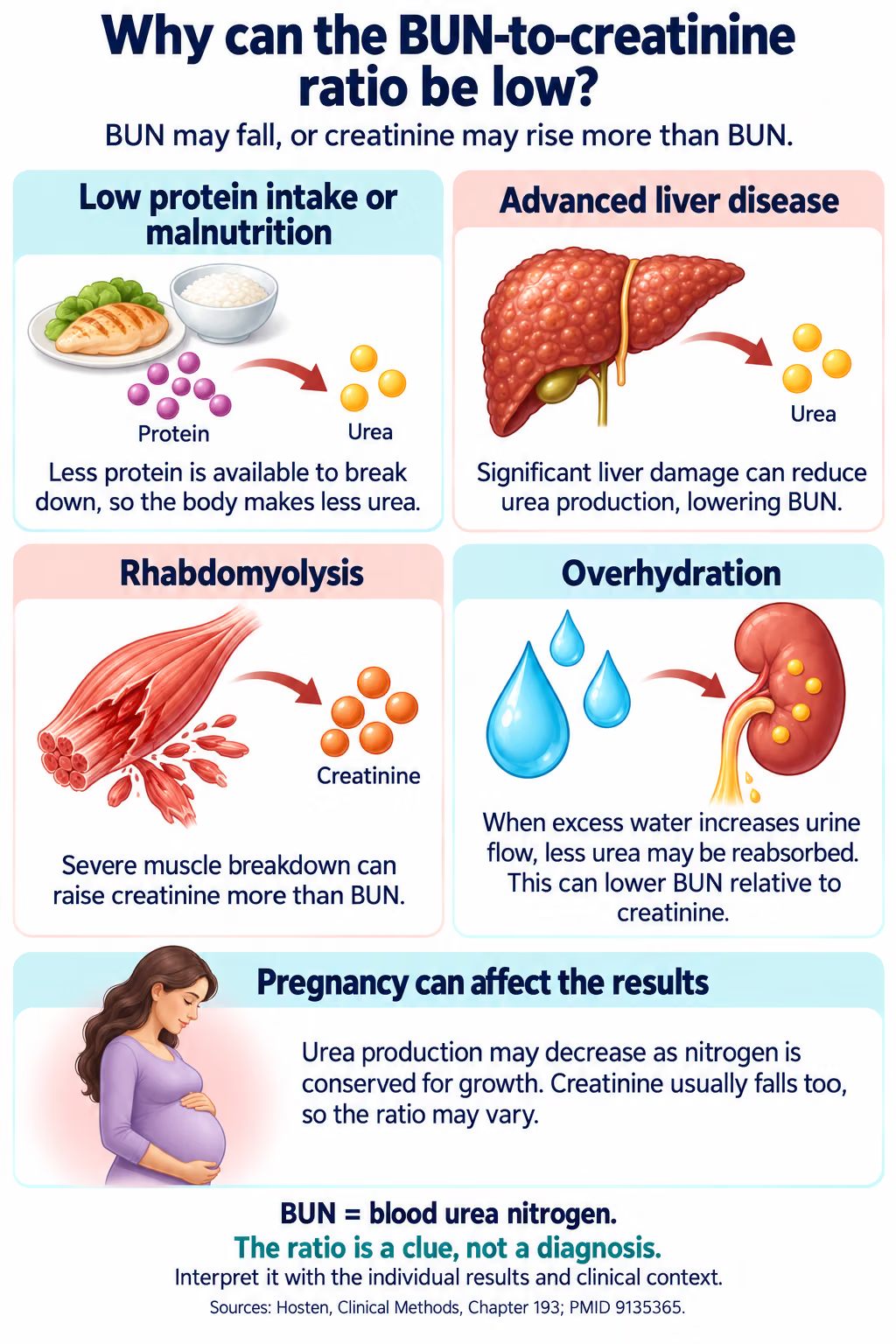
A ratio below the typical range is less commonly discussed but can still be clinically meaningful. Possible causes include:
- Low protein intake or malnutrition, which reduces how much urea the body produces.¹,⁴
- Advanced liver disease, since the liver is where urea is made in the first place.⁴
- Rhabdomyolysis. Severe muscle breakdown can increase creatinine disproportionately to BUN.⁴
- Pregnancy. Pregnancy can reduce urea production as nitrogen is conserved for growth. It generally lowers creatinine too.⁴
- Overhydration. When excess water increases urine flow, the kidneys may reabsorb less urea, allowing more to leave in urine. This can lower BUN relative to creatinine.⁴
Other Factors That Can Affect the Ratio
The BUN to creatinine ratio is not affected by kidney function alone. Age, sex, muscle mass, diet, medications, and even certain imaging tests that use contrast dye can all shift the numbers.⁴,⁵ This is one reason a single result is rarely used in isolation. Clinicians typically look at trends over time and pair the ratio with other kidney function tests, such as estimated glomerular filtration rate (eGFR), for a fuller picture.⁵,⁶
When to Talk to Your Doctor
If your BUN to creatinine ratio comes back outside the typical range, your healthcare provider will usually want to understand the individual BUN and creatinine values, your hydration and diet, any medications you take, and whether you have symptoms such as swelling, fatigue, changes in urination, or unexplained weight change. Repeat testing, additional kidney function tests, or imaging may be recommended depending on the full picture.³,⁵
Seek medical care promptly for severe weakness, very little urine, or blood in your stools, regardless of your test results. Sudden confusion, vomiting blood, or black, tarry stools warrant urgent medical assessment.
Looking Beyond a Single Lab Result
A BUN to creatinine ratio is a blood test and not a genetic test. If you want to learn whether inherited variants could affect your health, whole genome sequencing reads 100% of your DNA, including over 30,000 genes. Every Sequencing Kit Bundle includes Next Gen Disease Screening, which analyzes your genome for more than 15,000 conditions. Genetic results show risk, not a diagnosis, so talk with a doctor or genetic counselor before acting on them.
Shop All Whole Genome Sequencing Kit Bundles
Frequently Asked Questions About the BUN to Creatinine Ratio
What is a normal BUN to creatinine ratio?
A typical BUN to creatinine ratio in adults is between about 10:1 and 20:1. Laboratories use slightly different methods, so check the range printed on your own report.
What does a high BUN to creatinine ratio mean?
A high ratio often points to dehydration or reduced blood flow to the kidneys. Gastrointestinal bleeding, a high protein diet, some medicines and a urinary blockage can also raise it, and your doctor reads it together with your BUN, creatinine and symptoms.
What does a low BUN to creatinine ratio mean?
A low ratio can come from low protein intake or malnutrition, advanced liver disease, overhydration, or conditions that raise creatinine such as rhabdomyolysis.
Is a high BUN to creatinine ratio dangerous?
A high BUN to creatinine ratio alone does not tell you how serious the underlying cause is. Some causes, such as mild dehydration, are temporary and treatable. Seek medical care promptly for severe weakness, very little urine, or blood in your stools, regardless of your test results. Sudden confusion, vomiting blood, or black, tarry stools warrant urgent medical assessment.
How is the BUN to creatinine ratio calculated?
Divide BUN by creatinine, both in mg/dL. For example, a BUN of 7 mg/dL and a creatinine of 0.6 mg/dL give a ratio of about 11.7:1, which is within the typical range.
Can I lower my BUN to creatinine ratio?
Treatment depends on the cause. Drinking enough fluid helps when dehydration is the reason, but do not change your diet or stop a medicine without talking to your doctor, who may want to repeat the test.
References
Superscript numbers in the article refer to the sources below.
- National Library of Medicine. BUN (Blood Urea Nitrogen). MedlinePlus. medlineplus.gov
- Mayo Clinic. Blood urea nitrogen (BUN) test. Mayo Clinic Tests and Procedures. mayoclinic.org
- Cleveland Clinic. Blood Urea Nitrogen (BUN) Test. Cleveland Clinic Health Library. my.clevelandclinic.org
- Hosten AO. BUN and Creatinine. In: Clinical Methods: The History, Physical, and Laboratory Examinations, 3rd edition. NCBI Bookshelf. ncbi.nlm.nih.gov
- Cleveland Clinic. Kidney Function Tests. Cleveland Clinic Health Library. my.clevelandclinic.org
- Cleveland Clinic. Creatinine Clearance Test. Cleveland Clinic Health Library. my.clevelandclinic.org
- American Kidney Fund. Serum creatinine test. kidneyfund.org
This article is for general education and is not a substitute for professional medical advice, diagnosis, or treatment. Always talk to a qualified healthcare provider about your own test results.
Related Articles
- Alport Syndrome: an inherited kidney condition and how genetic testing helps.
- Autosomal Dominant Alport Syndrome: a dominant form with kidney involvement.
- Congenital and Infantile Nephrotic Syndrome: genes and tests for early onset kidney protein loss.
- Autosomal Recessive Distal Renal Tubular Acidosis: a genetic cause of kidney acid handling problems.
- What Is a Gene?: how genes carry the instructions behind inherited conditions.