
When AI Gets Genetics Wrong: Case 1 — Familiar Names, Wrong Context
By Sequencing Team, The team of bioinformaticians, Genetic Health Coaches, and writers at Sequencing.
Jul 30, 2026
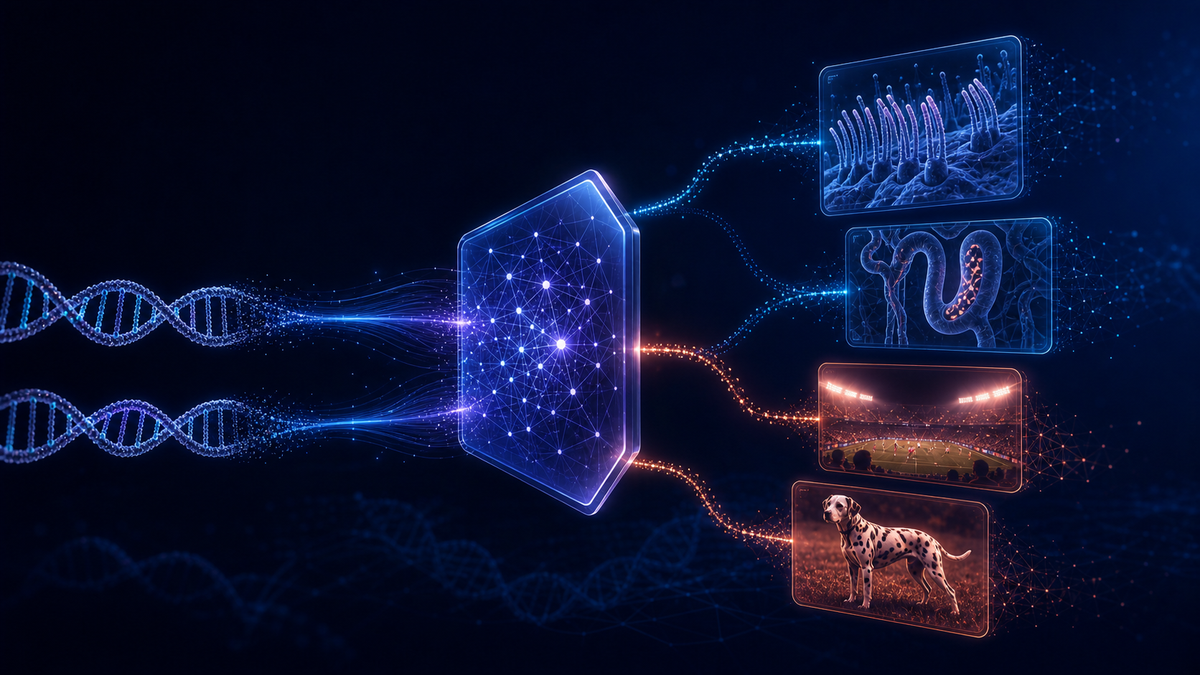
Example 1: The ESPN Gene
What AI Said
When asked about conditions associated with the ESPN gene, one AI tool returned the following description:
"Excessive viewing of sports, neglect of personal responsibilities, social withdrawal, irritability when missing a game, loss of sleep due to late-night games, decreased productivity at work or school, physical discomfort from prolonged sitting, eye strain, headaches, anxiety about game outcomes, mood swings related to game results, overconsumption of snacks or alcohol during games, financial issues from purchases related to merchandise or services."
The AI interpreted ESPN as the Entertainment and Sports Programming Network rather than recognizing it as a gene symbol.
The Correct Information
ESPN is a real human gene — also known as espin — that encodes a protein critical for the structure and function of hair cells in the inner ear. These hair cells are responsible for hearing and balance. Key facts:
- Mutations in ESPN are associated with hereditary hearing loss, including autosomal recessive and autosomal dominant forms.
- Affected individuals may develop significant hearing impairment from birth through adulthood, depending on the condition and variant inherited.
- The espin protein helps organize and maintain stereocilia — the delicate hair-like structures that detect sound vibrations.
- Defects in this protein disrupt the normal transmission of sound signals to the brain.
- ESPN is an active area of research into potential treatments for inherited hearing loss.
The confusion is understandable — ESPN is a well-known acronym in popular culture — but it illustrates how AI can prioritize the most common usage of a term over a specialized scientific one.
Example 2: Dalmatian Hypouricemia (Renal Hypouricemia)
What AI Said
When asked about Dalmatian Hypouricemia, an AI tool provided this description:
"Dalmatian Hypouricemia, also known as Dalmatian Bronzing Syndrome or HUU (Hyperuricosuria), is a genetic condition that affects Dalmatian dogs. It is characterized by the dog's inability to properly break down and excrete uric acid, which can lead to the formation of kidney or bladder stones. Treatment options for this condition may include a specialized diet low in purines, increased water intake, and in some cases, medications to help dissolve or prevent the formation of stones. Regular veterinary check-ups are essential for monitoring the dog's condition and preventing complications."
This response misidentifies the condition. Dalmatian hypouricemia is an alternative name for renal hypouricemia, a human genetic disorder — not a canine condition. The AI interpreted “Dalmatian” as referring to the dog breed and conflated the condition with hyperuricosuria in Dalmatian dogs, leading to an inaccurate description of the disorder, symptoms, and treatment.
The Correct Information
Renal Hypouricemia (RHUC) is a human genetic condition characterized by impaired uric acid reabsorption at the apical membrane of proximal renal tubule cells. Key facts:
- The syndrome is not lethal and may be asymptomatic in many individuals.
- Approximately 10% of patients experience complications including nephrolithiasis (kidney stones) and exercise-induced acute renal failure (Ichida et al., 2008).
- There is genetic heterogeneity: RHUC type 1 (OMIM 220150), caused by mutations in SLC22A12, is the best-characterized form, whereas RHUC type 2 (OMIM 612076) results from mutations in SLC2A9.
- The condition involves defects in uric acid transport proteins in the kidney — not a generalized inability to metabolize uric acid as the AI described.
While Dalmatian dogs do carry a well-known uric acid metabolism variant, Dalmatian Hypouricemia as a named human condition is entirely distinct — and the AI's response conflated two completely different biological contexts.
The Common Failure Mode
Both examples follow the same pattern:
- The gene or condition name had a more commonly known non-genomic association (a sports network; a dog breed).
- The AI produced confident, well-structured prose — making the errors easy to miss.
- A reader without genomics expertise would have no reason to question the response.
For genomics and clinical contexts, AI-generated content should always be verified against primary sources such as OMIM, NCBI Gene, UniProt, or peer-reviewed literature before being used in any patient-facing or research context.