
What Are Copy-Number Changes in DNA?
By Sequencing Team, The team of bioinformaticians, Genetic Health Coaches, and writers at Sequencing.
Oct 5, 2026
What Is a Copy-Number Change?
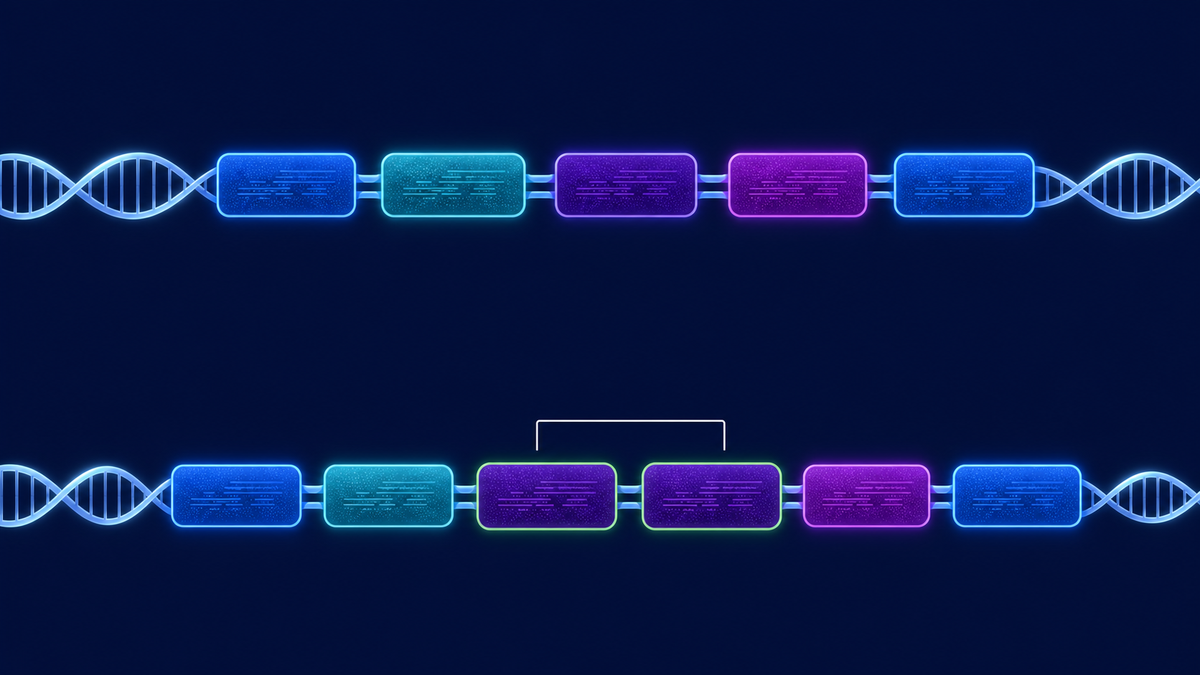
Genes are sections of DNA that contain instructions for the body. We usually inherit two copies of most genes, one from each parent. But sometimes, during the process of forming or copying DNA, a person ends up with a missing copy or an extra copy of a particular section. Scientists call these copy-number changes.
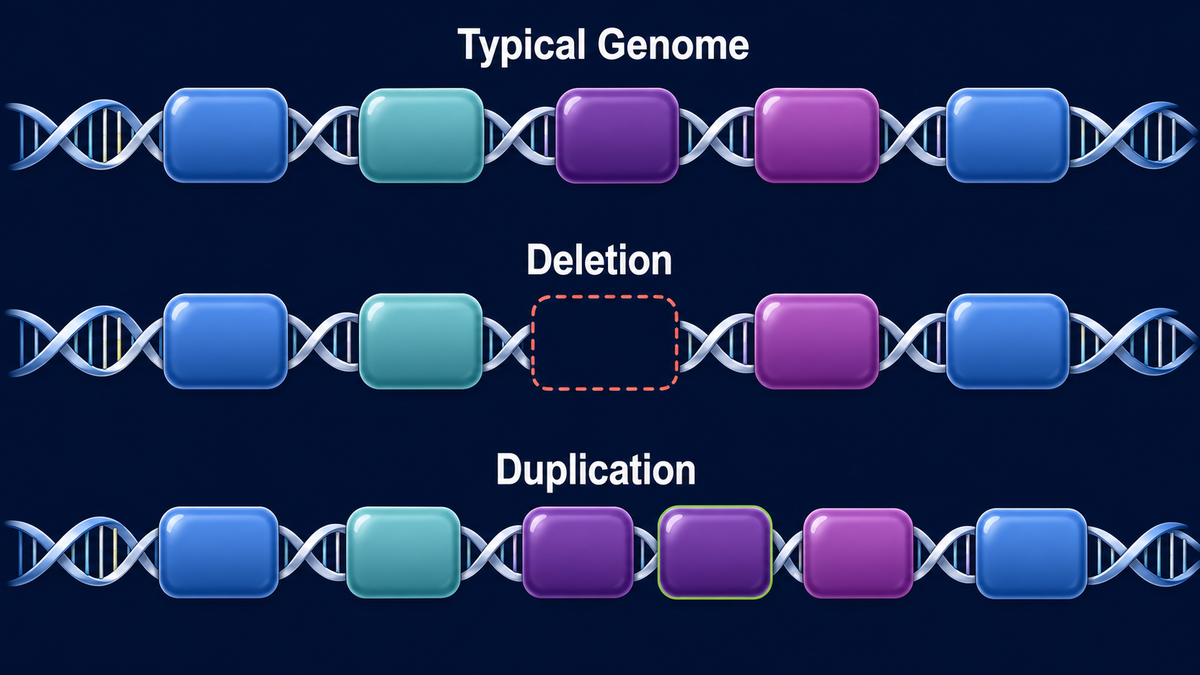
You may also hear them referred to as CNVs (copy-number variations). When a section of DNA is missing, it’s called a deletion. When there’s an extra copy, it’s called a duplication. The key idea is simply that the usual number of copies has changed.
Think of DNA Like a Recipe Book
Here’s a helpful way to picture it: imagine your DNA is a giant recipe book that your body uses to build and run itself. Every gene is like a recipe with instructions for making a specific protein or carrying out a specific job.
A copy-number change is like something going slightly wrong at the photocopier. One of the recipe pages might get accidentally copied twice (an extra copy, or duplication), or it might get torn out entirely (a missing copy, or deletion). Most of the time, the meal still turns out perfectly fine. Some missing or repeated pages don’t change the outcome. But occasionally, depending on which recipe is affected, it can make a difference to how things turn out.
Why Do Copy-Number Changes Happen?
Copy-number changes usually occur by chance. When cells divide and DNA is being copied, tiny errors can happen when a section gets duplicated or skipped over. It’s a bit like a copy-paste mistake in a very long document.
They can also be inherited or passed down from a parent who carries the same change. And here’s something reassuring: copy-number changes are surprisingly common. Most people carry a handful of them without ever knowing it, and without experiencing any health effects whatsoever. They are a normal part of human genetic variation.
What Do Copy-Number Changes Mean for My Health?
The honest answer is: it depends on which section of DNA is involved. There are three broad outcomes:
- Not expected to affect health. Many copy-number changes are part of normal genetic variation and are not known to cause health problems. They sit quietly in your DNA, have no impact on how your body works, and are simply part of what makes you genetically unique.
- May affect health. Some copy-number changes are linked to specific health conditions. For example, certain developmental differences or increased risk for some diseases. However, having a particular change does not guarantee you will develop a condition. Many people who carry the very same change live full, healthy lives. The relationship between a copy-number change and health is often more nuanced than a simple cause-and-effect.
- Uncertain significance. For some copy-number changes, scientists genuinely don’t yet know what they mean. Research is ongoing, and a change that is classified as “uncertain” today may be reclassified as benign or disease-causing as more evidence becomes available. Some results may remain uncertain.
How Are Copy-Number Changes Found?
Copy-number changes can be detected through genetic testing. Whole genome sequencing reads DNA across the genome and is one of the ways to find them. Another common method is chromosomal microarray analysis, a targeted test specifically designed to look for missing or extra sections of DNA across the genome.
Your doctor or a genetic counselor can advise which type of test is most appropriate depending on your situation.
What Should I Do If I Have One?
First and foremost: don’t panic. Many copy-number changes do not cause health problems. Whether follow-up is needed depends on the specific result. Finding one on a genetic test is not automatically cause for concern.
If a test does reveal a copy-number change, a genetic counselor is your best resource. These specialists are trained to interpret genetic results in the context of your personal and family health history. They can explain what the specific change means or doesn’t mean for you, and help you decide whether any follow-up steps make sense. You don’t have to figure it out alone, and professional guidance can make a big difference in understanding your results clearly and calmly.
Frequently Asked Questions
Do copy-number changes run in families?
It depends on the specific copy-number change. Some are inherited or passed down from a parent, just like eye color or blood type. If you inherited a copy-number change, there's a chance you could pass it on to your own children as well.
Others arise spontaneously, sometimes called "de novo" changes. These happen by chance during the formation of an egg or sperm cell, or early in development. A de novo copy-number change is not inherited from either parent but may still be passed on to that person’s children.
A genetic counselor can review your results and help determine whether your copy-number change is inherited or spontaneous and what that might mean for you and your family.
How do I find out if I have a copy-number change?
Copy-number changes can be detected through genetic testing. Two of the most common methods are:
- Chromosomal microarray (CMA): A specialized test designed specifically to detect copy-number changes across the genome. It's often used when a doctor suspects a genetic cause for developmental delays or certain health conditions.
- Whole genome sequencing (WGS): A comprehensive test that reads your entire DNA sequence and can also identify copy-number changes alongside other types of variants.
Some consumer DNA tests (like those used for ancestry) may also detect certain copy-number changes, though they are generally less comprehensive than clinical tests.
Your doctor or a genetic counselor can help you decide which test is most appropriate for your situation and explain what the results mean.